

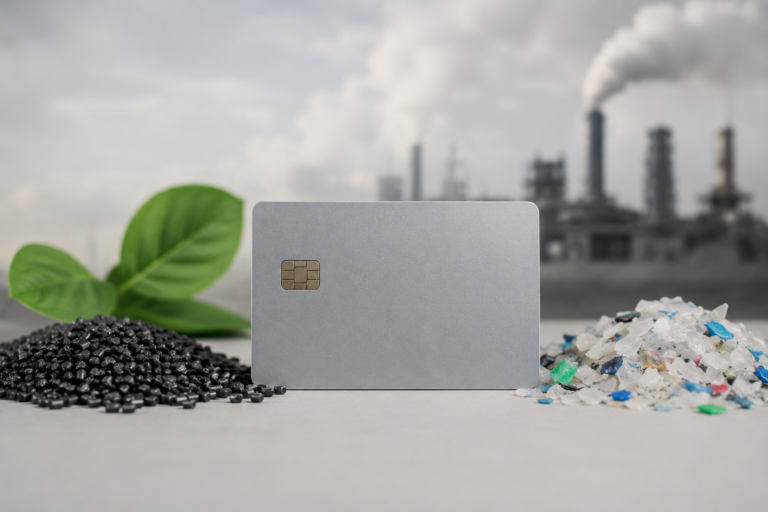
Credit cards have become an essential part of everyday life, enabling fast transactions and supporting the growth of the global economy. While their convenience is widely recognized, the environmental implications associated with their production are often overlooked. Behind every payment tool lies a complex industrial process that requires raw materials, energy, and transportation networks.
As concerns about climate change and resource depletion continue to grow, greater attention is being directed toward the ecological footprint of consumer products. Financial institutions, manufacturers, and environmentally conscious consumers are increasingly evaluating how these commonly used items contribute to pollution, waste generation, and carbon emissions throughout their lifecycle.
Raw materials and resource consumption
The production of modern payment instruments begins with the extraction and processing of various materials. Traditional versions are commonly made from polyvinyl chloride, a plastic derived from fossil fuels. The creation of this material involves energy-intensive procedures that contribute to greenhouse gas emissions and place pressure on natural resources.
Beyond the plastic base, manufacturers also incorporate metallic components, embedded chips, magnetic strips, adhesives, and protective coatings. Each of these elements requires its own supply chain, resulting in additional environmental burdens related to mining, refining, and industrial processing. The cumulative impact becomes significant when billions of units are produced worldwide.
Water consumption is another often overlooked factor. Industrial facilities involved in material preparation, cooling systems, and finishing operations frequently require substantial quantities of water. In regions already facing water scarcity, these demands can intensify competition for limited resources and create additional environmental stress.
Transportation further expands the ecological footprint associated with production. Raw materials may originate in one country, electronic components in another, and final assembly in a different region altogether. The movement of these materials through global logistics networks generates emissions from ships, trucks, and aircraft.
The short replacement cycle adopted by many financial institutions also contributes to resource consumption. Expiration dates, design updates, and technological upgrades often result in the manufacture of new units long before older ones have reached the end of their functional lifespan, increasing demand for virgin materials.
Industrial processes and waste generation
Manufacturing facilities rely on sophisticated machinery to cut, laminate, print, and personalize payment tools. These operations require substantial amounts of electricity, especially in high-volume production environments. The source of this energy plays a major role in determining the overall environmental impact of the manufacturing process.
During production, material losses are unavoidable. Trimmings, defective items, misprints, and testing samples can generate large volumes of industrial waste. Although some facilities implement recycling programs, a significant portion of discarded material may still end up in landfills or incineration systems depending on local waste management infrastructure.
Chemical usage also raises environmental concerns. Printing inks, surface treatments, adhesives, and protective coatings can contain compounds that require careful handling. Improper disposal or accidental releases may affect soil quality, water systems, and local ecosystems surrounding production facilities.
The integration of electronic components introduces another layer of complexity. Embedded microchips require specialized manufacturing techniques involving rare materials and highly controlled environments. These processes often consume considerable amounts of energy and generate waste streams that must be managed responsibly.
End-of-life disposal presents an additional challenge. Because these products combine plastic and electronic elements, recycling can be difficult and costly. Many discarded units are not properly processed, leading to the accumulation of waste and the loss of potentially recoverable materials.
Emerging solutions for a more sustainable future
Growing environmental awareness has encouraged the financial sector to explore alternative materials and production methods. Recycled plastics have become increasingly popular, allowing manufacturers to reduce dependence on virgin fossil-fuel-based resources while giving existing materials a second life.
Biobased alternatives are also attracting attention. Some organizations have introduced products made from renewable sources such as corn-derived materials or other plant-based compounds. Although these options are not without challenges, they represent a promising step toward reducing reliance on conventional plastics.
Design innovation is helping extend product longevity. Improved durability, enhanced chip performance, and more resistant materials can reduce replacement frequency. By increasing the useful life of each unit, organizations can lower resource consumption and decrease overall manufacturing demand.
Many financial institutions are incorporating sustainability goals into procurement decisions. Environmental certifications, responsible sourcing requirements, and carbon reduction targets are becoming important criteria when selecting production partners. These measures encourage broader adoption of environmentally conscious practices across the industry.
The future of payment technology may ultimately reduce the need for physical products altogether. Digital wallets, mobile payment platforms, and virtual transaction systems continue to gain popularity around the world. While digital infrastructure also has environmental impacts, the reduction in physical manufacturing could significantly decrease material consumption and waste generation over time.
Achieving meaningful progress will require collaboration among manufacturers, financial organizations, policymakers, and consumers. By embracing innovative materials, cleaner production methods, and circular economy principles, the industry can minimize its ecological footprint while continuing to provide secure and convenient financial services. Greater transparency and ongoing investment in sustainable solutions will be essential to ensuring that future developments align with broader environmental goals and global sustainability commitments.
Corporate responsibility and long-term environmental transformation
The growing demand for sustainable business practices is reshaping the priorities of organizations involved in financial services. Environmental performance is no longer viewed as a secondary concern, as consumers increasingly expect companies to demonstrate measurable commitments to reducing their ecological impact.
Corporate sustainability strategies now frequently include assessments of product lifecycles and supply chain emissions. By evaluating environmental costs from raw material extraction to final disposal, companies can identify opportunities to improve efficiency and reduce waste throughout production networks.
Transparency has also become a key factor in building trust with environmentally conscious customers. Many institutions are publishing sustainability reports that disclose carbon reduction initiatives, material sourcing policies, and progress toward environmental objectives. These disclosures help create accountability and encourage continuous improvement.
Collaboration between industry stakeholders is accelerating the adoption of greener practices. Manufacturers, technology providers, recycling companies, and regulatory agencies are working together to develop standards that support resource conservation and responsible production methods across the sector.