

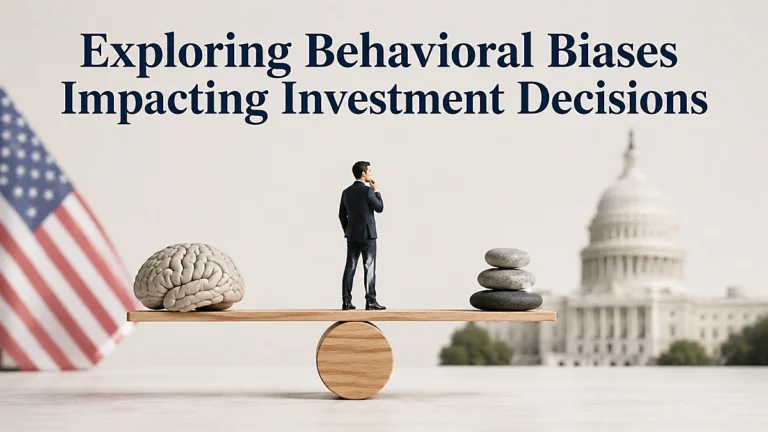
Understanding the subtle factors influencing financial choices is essential for anyone engaging with wealth growth. Investments remain a critical focus for individuals seeking to enhance their economic future, yet human psychology often sways decisions unpredictably. This introductory analysis explores the hidden drivers that shape monetary commitment behavior in markets.
Various cognitive and emotional tendencies can disrupt rational judgment, steering participants away from optimal strategies. Recognizing these influences enhances awareness, enabling more disciplined methods for allocating capital. Such insights contribute significantly to achieving sustained returns amid fluctuating conditions.
Cognitive distortions affecting portfolio selection
Among the countless psychological tendencies, cognitive misconceptions prominently impact asset allocation. Investors frequently exhibit confirmation bias, favoring information that supports preconceived notions while discounting contradictory evidence. This inclination hampers objective evaluation of opportunities, potentially leading to suboptimal diversification.
Anchoring effects also play a significant role as individuals tend to rely heavily on initial data points when assessing subsequent information. This attachment to early benchmarks may prevent accurate reassessment as conditions evolve, causing a failure to capitalize on emerging trends. Consequently, portfolios may become outdated or misaligned with goals.
Overconfidence is another prevalent distortion where personal beliefs in forecasting abilities become exaggerated. Such inflated self-assurance might provoke excessive trading and risk-taking behaviors, increasing vulnerability to market volatility. As a result, many experience disappointing outcomes compared with more conservative approaches grounded in empirical evidence.
Additionally, availability heuristic causes people to judge the likelihood of events based on recent or memorable occurrences, neglecting a comprehensive viewpoint. This narrowed focus might skew risk perception and decision timing, often resulting in impulsive moves contrary to long-term strategies. Understanding and mitigating these biases is crucial for effective asset management.
Impact of emotional reactions on decision-making
Emotions profoundly influence financial behavior, often overriding logical analysis. Fear and greed constitute two dominant feelings shaping transactions, sometimes driving choices disconnected from actual market fundamentals. Fear can trigger premature selling during downturns, locking in losses instead of holding for recovery.
Conversely, greed might prompt chasing of hot stocks or speculative ventures without adequate due diligence or risk control. Such impulsive enthusiasm risks significant capital erosion. Emotional regulation thus emerges as an indispensable competence for investors aiming to maintain discipline amid uncertainty.
Stress stemming from economic volatility can impair cognitive functioning, reducing patience and increasing susceptibility to panic. These response patterns frequently manifest in herd mentality where individuals mimic majority behavior, reinforcing price bubbles or crashes. Recognizing triggers and cultivating resilience supports steadier decision-making processes.
Mindfulness techniques and structured routines provide practical ways to temper emotional impulses, promoting balanced evaluations. By building self-awareness around feelings, one gains tools to pause and reassess before committing resources, nurturing prudent practices that align with overarching financial objectives.
Societal influences shaping financial tendencies
Beyond internal cognitive and emotional spheres, external social dynamics significantly contribute to behavioral patterns surrounding asset commitments. Peer pressure and social comparison often encourage imitation of others’ approaches regardless of personal suitability or risk tolerance. This social contagion intensifies during periods of rapid market gains or losses.
Media portrayal of financial success stories and trending investments can fuel unrealistic expectations and herd-like engagement. Such amplification effects distort individual judgment, creating momentum that may not endure or reflect underlying value. Educating oneself to identify media biases aids in maintaining an independent perspective.
Cultural norms and family upbringing also instill foundational attitudes toward money management, influencing confidence levels and preferred strategies. These inherited beliefs can either facilitate prudent conduct or perpetuate counterproductive habits, making it important to critically evaluate inherited narratives. Tailoring approaches to personal circumstances is vital for sustainable outcomes.
Moreover, institutional frameworks and policy environments contribute to shaping behavior by establishing norms and incentives. Regulatory changes, tax policies, and availability of financial products interact with human psychology, possibly exacerbating or mitigating cognitive pitfalls. Awareness of such context enhances strategic planning and adaptive responses.
Role of heuristics in financial judgment
Heuristics represent mental shortcuts individuals use to simplify complex decisions. While these cognitive tools increase efficiency, they also introduce systematic errors. For instance, representativeness heuristic causes people to judge the probability of an event by how much it resembles existing stereotypes rather than statistical reality.
This tendency may result in misidentifying promising opportunities or underestimating risks, skewing portfolio composition. Similarly, the disposition effect leads investors to hold losing positions too long while prematurely selling winners, impairing overall performance. Understanding these shortcut pitfalls equips individuals to challenge intuitive responses.
Another heuristic, mental accounting, causes segregation of finances into separate buckets, influencing spending and investing behavior irrationally. This fragmentation can prevent holistic risk assessment and often leads to inefficient allocation. Encouraging unified analysis counters such compartmentalization, fostering optimal resource use.
Awareness and education about heuristic biases enable investors to develop critical reflection and adopt decision frameworks based on comprehensive data. Integrating quantitative models with qualitative insight helps mitigate the negative impact of cognitive shortcuts on financial outcomes.
Investments: overcoming bias through strategic discipline
The realm of wealth management benefits significantly from conscious efforts to recognize and rectify psychological distortions. Establishing robust processes centered on evidence-based principles counterbalances tendencies toward irrationality. Structured frameworks help maintain focus on long-term objectives despite short-term market fluctuations.
Incorporating diversification strategies minimizes exposure to single-event risks magnified by emotional reactions. Regular portfolio reviews anchored in predetermined criteria prevent heuristic-driven impulsiveness. Additionally, setting clear investment policies supports consistency and prevents deviation caused by temporary sentiments.
Utilizing technological tools like algorithmic advisors and risk assessment software can provide objective guidance, reducing influence of human biases. Blending automated insights with personal judgment creates synergy, allowing flexibility while respecting rational boundaries. Moreover, fostering financial literacy empowers individuals to better understand market mechanisms and psychological influences.
Cultivating patience and viewing market cycles with historical context promotes resilience, helping investors avoid panic selling or euphoric buying. Ultimately, consciously addressing behavioral challenges enhances decision quality and increases potential for achieving financial aspirations securely over time.
Methods to cultivate rational investment habits
Developing habits aligned with logical evaluation requires intentional practice and ongoing reflection. Mindset shifts emphasizing process over outcome encourage disciplined adherence to strategies, reducing susceptibility to emotional reactions. Keeping detailed records of decisions and results supports learning and improvement.
Engaging with professional advisors provides additional perspective often free from personal biases, helping identify blind spots. Periodic training and exposure to behavioral finance principles expand awareness of common pitfalls and mitigation techniques. Furthermore, creating accountability structures such as investment committees or peer discussions fosters commitment to sound practices.
Implementing stress management and mindfulness exercises improves mental clarity, aiding in response modulation during volatile situations. Recognizing warning signs of irrational impulses empowers timely corrective actions. Establishing predetermined exit rules guards against detrimental behavior induced by fear or greed.
Regularly reviewing financial goals and milestones maintains alignment between objectives and choices. This clarity diminishes confusion and indecision, promoting confidence in plan execution. Embedding these habits into lifestyle constructs yields sustained improvement in managing economic resources prudently.
Technological advancements mitigating behavioral errors
Emerging digital solutions play an integral role in reinforcing objective decision-making, leveraging data analytics and artificial intelligence to counteract psychological vulnerabilities. Intuitive platforms provide personalized insights and risk profiles to guide asset selection aligned with individual parameters. Automation reduces reliance on emotional judgment and impulsive responses.
Robo-advisors offer customized portfolio recommendations based on sophisticated algorithms considering diversification, cost efficiency, and risk appetite. These technologies minimize human oversight lapses, facilitating disciplined implementation of investment plans. Additionally, real-time monitoring and alerts enhance responsiveness without panic-driven behavior.
Advanced simulation tools enable scenario analysis, exposing users to potential outcomes under varying conditions. Such experiential learning assists in calibrating expectations and understanding inherent uncertainties associated with financial markets. Training through virtual environments contributes to emotional regulation and better preparedness.
Integrating behavioral finance principles within fintech applications helps identify users’ bias tendencies and provides corrective suggestions. Encouraging long-term perspective and consistent contributions through automated scheduling fosters stability and wealth accumulation. These innovations represent a valuable complement to traditional advisory methods.