
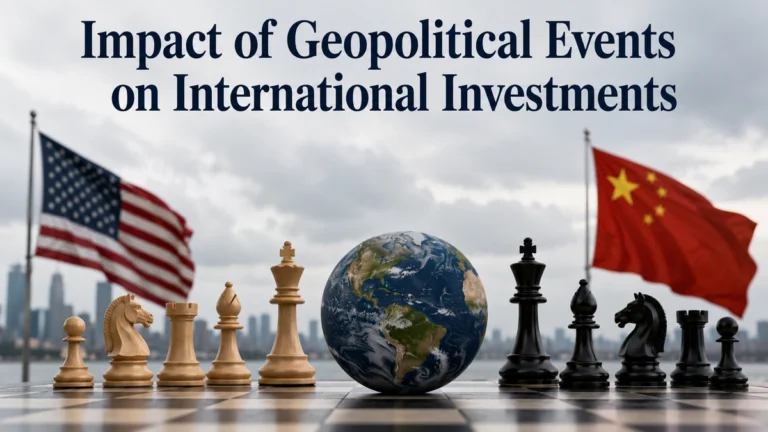
The dynamics of global capital allocation have always been influenced by unpredictable external factors. Among these, geopolitical occurrences stand out as a major force that shapes investor confidence and market behaviors. Understanding how such episodes reshape financial flows is crucial for anyone engaged in the domain of investments.
Analyzing the interplay between political transformations, conflicts, and economic sanctions provides a clearer picture of risk management strategies. Investors continually adapt their portfolios to mitigate adverse impacts stemming from sudden changes on the international stage.
Shifts in political alliances and their financial repercussions
Political realignments between countries often cause significant alterations in trade agreements and economic cooperation. Such transformations can either open new investment opportunities or lead to the withdrawal of existing capital from affected regions. Investors must stay vigilant to anticipate these scenarios.
When two nations strengthen ties or sever partnerships, market optimism or pessimism quickly follows. This creates volatility in asset prices, directly influencing strategic decision-making processes. Global funds frequently rebalance allocations to maintain optimal returns against emerging uncertainties.
Furthermore, altered diplomatic relationships can impact regulatory frameworks, taxation policies, and market access for foreign investors. These changes necessitate a thorough reassessment of existing commitments and potential ventures, emphasizing the importance of geopolitical literacy.
The unpredictability inherent in political shifts means that large portfolio adjustments might happen abruptly. Being prepared to respond flexibly to these developments can protect capital and uncover novel growth prospects amid evolving international contexts.
Influence of regional conflicts on market stability
Localized disputes often have ripple effects that transcend borders, unsettling global markets. Armed confrontations or civil unrest disrupt supply chains, affecting commodity prices and corporate earnings worldwide. This volatility challenges investors to reconsider risk exposure carefully.
Risk-averse stakeholders may divert resources to safer havens, like government bonds or stable currencies, reducing liquidity in more volatile assets. Conversely, some may view periods of instability as an opportunity to acquire undervalued investments ahead of recovery.
The severity and duration of conflicts determine the extent of their financial impact. Prolonged instability can impair economic growth potentials, discouraging long-term capital influx. Timely intelligence on conflict resolution prospects provides a competitive edge in navigating these situations.
Moreover, insurance costs and operational risks for businesses increase in conflict zones, leading to higher expenses or withdrawal of investments. This situation requires continuous monitoring to adjust strategies appropriately and maintain portfolio resilience.
Economic sanctions and regulatory interventions affecting global portfolios
Imposed restrictions targeting specific countries often result in the freezing of assets, reduced trade volumes, and constrained financial services. These sanctions serve as tools for political leverage but simultaneously complicate investment strategies across borders.
Investors must assess the sanctions’ scope, duration, and enforcement rigor to avoid unintentional breaches that could result in legal penalties. This scenario demands heightened compliance vigilance and sometimes even divestment from affected entities or sectors.
Regulatory measures often extend beyond sanctions, with changes in foreign investment policies influencing capital movements. Emerging rules focused on national security or technological sovereignty can restrict access to lucrative markets, altering investment outlooks.
Staying informed about policy dialogues and understanding the geopolitical motives behind these interventions enable proactive maneuvering. Adapting to continuously shifting frameworks is essential to safeguard assets and exploit shifting market dynamics.
Diversification approaches to counter geopolitical uncertainty
Deploying capital across varied regions, industries, and asset classes serves as a fundamental method to buffer against isolated shocks due to geopolitical events. Such diversification dilutes the influence of adverse developments in any single sphere.
Investors employ geographic spread to capitalize on differing political climates and economic cycles worldwide. Allocating resources selectively enables optimization of returns while managing potential disruption risks effectively.
Besides geographic factors, sectoral diversification ensures resilience in the face of unevenly distributed impacts. Some industries may be more resistant to certain geopolitical pressures, providing safer alternatives during turmoil.
Integrating alternative assets like commodities, real estate, or private equity into portfolios further contributes to risk mitigation. A thoughtfully diversified approach allows for both protection and opportunity creation amid a volatile global landscape.
Long-term trends in investments influenced by geopolitical narratives
Beyond immediate shocks, wider geopolitical stories shape investment directions over extended periods. Themes such as shifting economic power centers or evolving trade blocs inform strategic allocation decisions focusing on future growth regions.
Investing through the lens of these narratives requires comprehensive analysis of underlying political, social, and economic transformations. Anticipating how changing alliances and policy frameworks will affect market fundamentals can yield significant advantages.
Global investors increasingly prioritize environmental, social, and governance criteria connected with geopolitical stability and regional development. Aligning financial goals with these considerations fosters sustainable portfolio growth aligned with emerging global priorities.
The integration of technological innovation as a geopolitical battleground also influences investor choices, encouraging exposure to sectors addressing cybersecurity, digital infrastructure, and energy transition. These long-term trends redefine investment landscapes.
Role of emerging markets in geopolitical investment strategies
Developing economies often embody a dual nature of providing lucrative opportunities and heightened risks stemming from unstable political environments. Understanding the delicate balance in these regions is critical for global investors.
Rapid economic expansion and demographic advantages attract attention, yet governance issues and conflict potentials create layers of complexity. Skillful navigation involves tailoring due diligence and risk assessment methodologies uniquely suited to each locale.
Partnerships with local entities and leveraging political risk insurance can enhance the feasibility of investment undertakings in emerging markets. Building trust and fostering transparency are fundamental steps toward reducing uncertainties.
Moreover, countries reforming their legal and economic structures in the quest for international integration present dynamic but volatile scenarios. Monitoring geopolitical developments facilitates capturing upside potentials while avoiding pitfalls inherent to these transforming contexts.
Investments adapting to geopolitical risk scenarios
Portfolio resilience hinges on the adoption of adaptive measures that reflect ongoing and anticipated geopolitical uncertainties. Dynamic asset allocation models and scenario planning have become essential instruments in this realm.
Proactive approaches entail continuous evaluation of political climates, regulatory changes, and market reactions influencing asset valuations globally. This vigilance supports timely readjustments and risk containment efforts.
Technology-driven analytics and real-time monitoring tools enrich strategic responses to geopolitical developments. They enable investors to identify emerging threats promptly and seize transient opportunities effectively.
Ultimately, integrating geopolitical risk management into core investment processes strengthens overall decision-making quality. It ensures that capital deployment aligns with both current realities and prospective global shifts, securing more stable performance over time.