

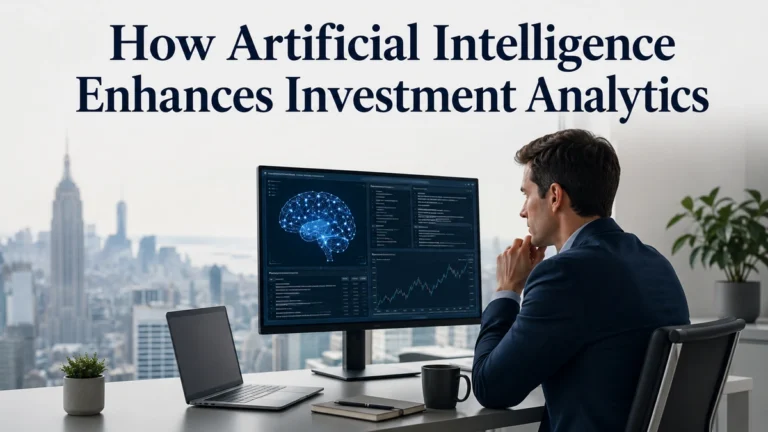
Financial portfolios benefit significantly from advanced technologies capable of parsing vast datasets, and the rise of machine intelligence has become a crucial enhancement in this domain. Integrating automated reasoning within asset management accelerates decision-making processes, providing deeper insights beyond human capacity. Such innovations reshape strategies around capital allocation and portfolio growth.
As investors seek to optimize returns and minimize risks, cognitive computing tools have emerged as essential allies. These systems analyze market trends and economic indicators with remarkable precision and speed. Consequently, the realm of asset evaluation and forecasting experiences transformational improvements powered by these sophisticated algorithms.
Data processing capabilities transforming asset evaluation
One of the most profound impacts of machine intelligence lies in its ability to process complex financial information efficiently. Massive datasets, once overwhelming for human analysts, become manageable as these systems identify patterns and correlations. This capacity enhances the accuracy of risk assessments and future performance projections in investment portfolios.
By continuously monitoring a multitude of data sources, intelligent tools adapt to emerging market dynamics swiftly. Such responsiveness allows for timely adjustments in investment strategies, potentially capturing market opportunities that static models might miss. Embracing these technologies ensures a proactive approach to portfolio management.
Moreover, advanced computational models employ natural language processing to interpret qualitative data such as earnings reports, news releases, and economic statements. This broadened analytical spectrum equips investors with a comprehensive view of factors influencing asset valuation, aiding more informed decisions.
Consequently, the integration of artificial intelligence in information handling refines the precision of valuation techniques. It facilitates granular insights, which are pivotal in constructing resilient and optimized investment portfolios tailored to individual risk appetites and financial goals.
Machine learning algorithms boosting predictive accuracy
Another critical advancement involves algorithms that learn from past financial data to forecast future trends. Machine learning models adapt iteratively, improving their predictive capabilities through exposure to new information. This dynamic learning process surpasses traditional static forecasting methods.
These predictive systems can identify subtle signals within market fluctuations that might otherwise be overlooked. By recognizing complex interdependencies between variables, they offer nuanced risk assessments and growth opportunities. Such precision underpins more strategic portfolio adjustments and resource allocation.
Furthermore, unsupervised learning techniques enable the discovery of novel investment clusters and relationships without pre-existing labels. This exploration can uncover unconventional strategies and emerging sectors worth investing in, broadening the scope for diversification.
The continuous evolution of predictive models fosters a competitive advantage by reducing uncertainty and supporting evidence-based investment choices. Consequently, stakeholders can anticipate market movements with greater confidence and agility.
Automation of risk management in financial portfolios
Incorporating intelligent systems for managing exposure to market volatility marks a new era in safeguarding assets. Automated controls evaluate risk levels against predefined parameters in real-time, signaling adjustments when necessary. This proactive stance shifts portfolios towards greater resilience.
Such automation reduces human error and emotional bias often influencing risk judgments. By relying on quantitative analysis, the approach ensures consistency and discipline in reaction to changing market conditions. This steadiness preserves capital and enhances long-term sustainability.
Additionally, scenario analysis powered by computational models can simulate extreme market events. These stress tests provide insights into potential vulnerabilities, enabling the construction of contingency plans and hedging strategies. Investors are thereby empowered to withstand unpredictable economic shocks.
Ultimately, intelligent risk frameworks augment traditional assessment techniques, delivering dynamic and comprehensive safeguards. This evolution enhances confidence in both institutional and individual investment management approaches.
Technological integration with human expertise
Despite the strengths of automated systems, the collaboration between technology and human insight remains paramount. Artificial intelligence tools serve to augment analysts’ capabilities, providing enhanced data and recommendations rather than replacing human judgment. This synergy yields superior outcomes.
Financial professionals interpret algorithm outputs through the lens of experience and contextual understanding. They can weigh qualitative aspects and strategic considerations that machines might not fully capture. This interpretative layer enriches the decision-making process.
Training and upskilling in data literacy become crucial for investment practitioners to effectively utilize intelligent technologies. A proficient partnership between humans and machines elevates the precision and relevance of portfolio management activities.
Balancing computational power with seasoned intuition fosters an adaptive environment. Organizations embracing this integrated approach can innovate continuously and respond nimbly to evolving market landscapes.
Emerging applications of investments powered by machine intelligence
Innovative uses of artificial intelligence extend beyond traditional portfolio analytics into new territories of asset management. For instance, algorithmic trading platforms adjust positions autonomously based on real-time signals, optimizing entry and exit without human intervention. This capability enhances responsiveness and efficiency.
Robotic advisors leverage cognitive systems to tailor investment plans to individual profiles, automating personalized asset allocation. These digital solutions democratize access to sophisticated financial guidance, expanding the investor base. They maintain engagement through continuous adjustment and feedback.
Moreover, sentiment analysis tools gauge public and market emotions through social media and news content, influencing investment strategies. By incorporating this qualitative data, the technology anticipates trends shaped by collective behavior patterns, often precursors to market movements.
These expanding applications underline the transformative potential of machine intelligence to reshape how capital is deployed, managed, and grown. The integration of these tools heralds a new paradigm of intelligent asset stewardship.